Accessible CPR & AED Awareness
A student-led educational platform built on a simple belief: some knowledge is better than no knowledge at all.
Our Story
Founder

Mentor
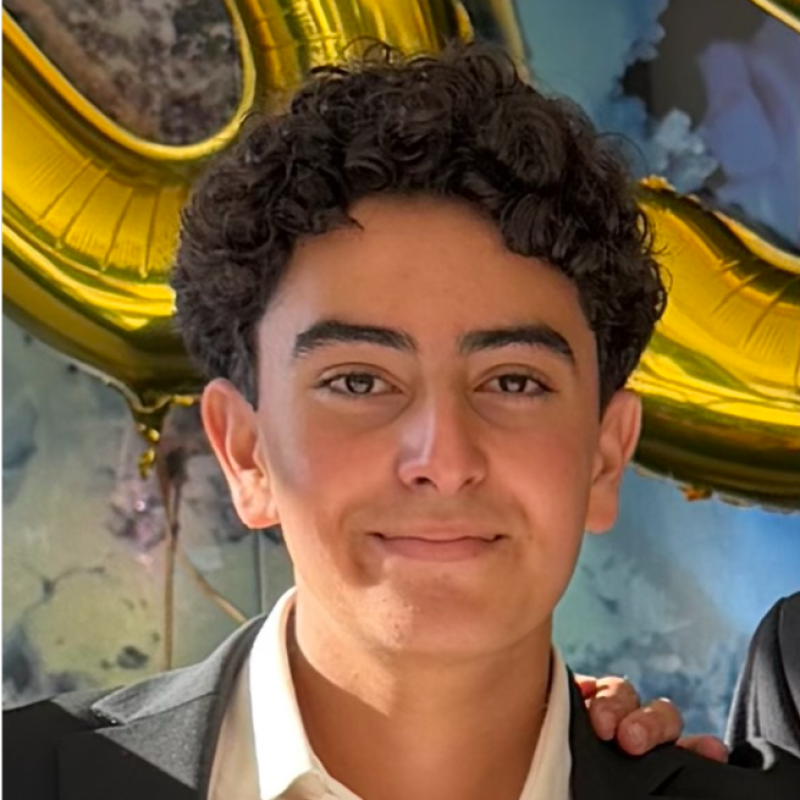
Founded by Blake Mashour in partnership with Nathan Valdez, a professional community member at St. Margaret's, ACAA (Accessible CPR & AED Awareness) is a student-led educational platform dedicated to increasing public awareness and familiarity with CPR and AED use through interactive learning, scenario-based simulations, and accessible training resources.
Why We Started
ACAA was created to address a simple problem: many people never receive CPR training. Formal certification courses are valuable, but time, cost, and accessibility often keep people from taking part. As a result, many people may find themselves unprepared to respond in an emergency. ACAA aims to close that gap by giving more people access to foundational CPR and AED knowledge instead of leaving them with no training at all.
350,000+
Out-of-hospital cardiac arrests per year in the U.S.
7-10%
Survival decrease per minute without CPR or defibrillation
Those first few minutes can make a critical difference.
The idea, simply
Why accessible training matters
It comes from a simple belief: some knowledge is better than no knowledge at all.
The Barrier
Formal training is costly & time-consuming
So most people never get certified.
Our Role
ACAA is free, short, and starts with awareness
A bridge, not a replacement: the essentials for people who can't certify, and a refresher for those who can.
The Outcome
More people ready to act
Confidence to step in during the critical minutes before help arrives.
ACAA isn't a replacement for certification. It's an accessible starting point, and a way to refresh what you know.
Our Approach
The idea behind ACAA is straightforward: some knowledge is better than no knowledge at all. Full CPR certification offers more in-depth training and is still extremely valuable, but not everyone is able to pursue it. ACAA is not a replacement for formal certification. It's an accessible starting point for people who can't complete full training, and a way to refresh what you know about CPR and AED response.
By making basic lifesaving knowledge easier to access, ACAA hopes to give more people the confidence to act in the critical minutes before professional help arrives. That means learning to recognize cardiac arrest, call for help, begin chest compressions, and locate and use an AED.
Grant-Funded Impact
The project has been supported through two consecutive Mosley Venture to Serve Grants, receiving $1,000 in funding each year to continue expanding its impact and accessibility.
Behind the Build
A look at the prototyping, testing, and early builds that shaped ACAA into the platform it is today.


How to Use ACAA
Follow these steps to get the most out of your training experience.
Learn the Steps
Start by working through our free CPR and AED guide. You'll learn scene safety, how to check responsiveness, proper chest compression technique, and how to operate an AED, all at your own pace.
Practice a Scenario
Test what you know in realistic emergency scenarios set in different locations: a beach, a mall, a school gym, an office, or a restaurant. Make real-time decisions and get instant feedback.
Practice CPR & AED Skills
Within each simulation, you'll practice hands-on skills: performing chest compressions at the correct rate and depth, and using a virtual AED with realistic voice prompts and pad placement.
Review & Improve
After each scenario, review your performance breakdown and get a suggestion on which course module to revisit. Earn achievement badges, climb the leaderboard, and retry scenarios to improve.